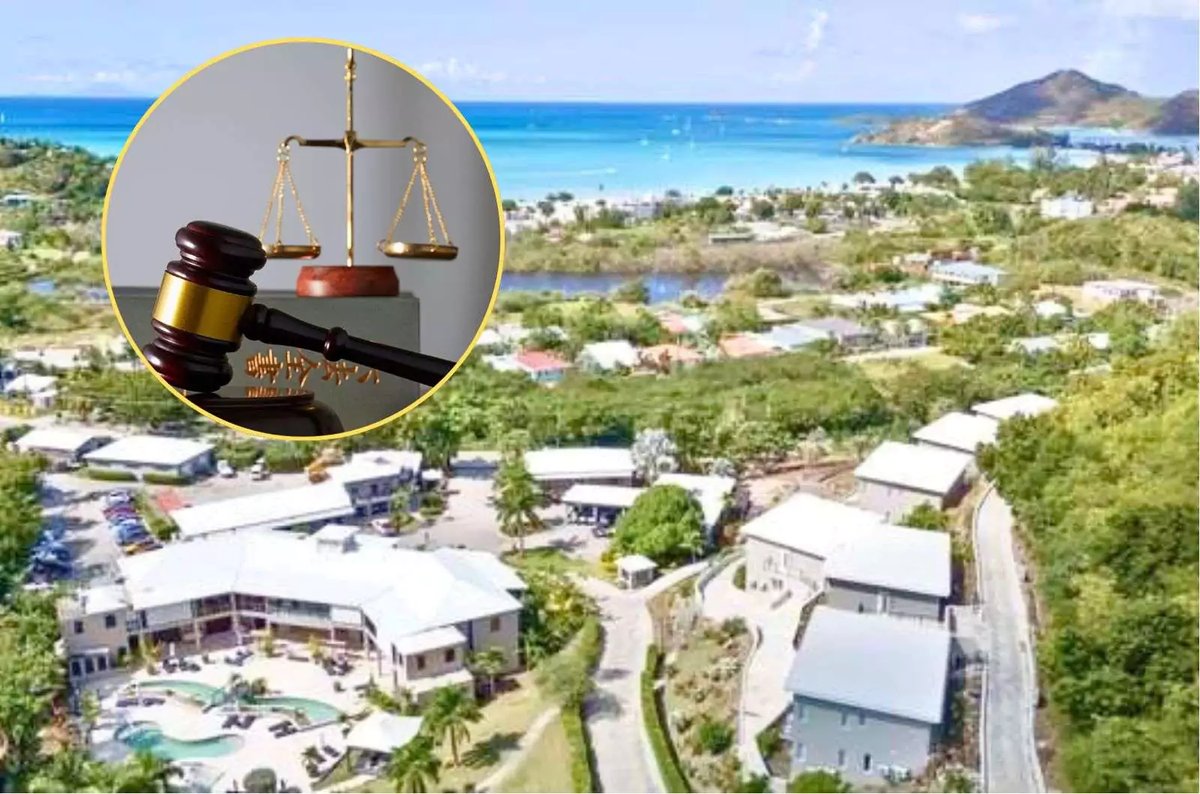
A High Court judge has dismissed a Jolly Harbour homeowner's application to prevent the gated community's management company from labelling him a non-payer and using that characterisation against him in ongoing legal proceedings.
According to Antigua.news, the ruling, delivered on April 2, rejected the application brought by Cyprian Kowalczyk, owner of Parcel 573 within Jolly Harbour, after the judge determined he had failed to meet the legal threshold required for the emergency court order he sought.
The decision does not resolve the underlying dispute. A full trial is still to be held to determine whether Kowalczyk is legally obligated to pay community charges to Caribbean Developments (Antigua) Limited — the company, known as CDAL, that manages Jolly Harbour.
Kowalczyk had sought the emergency order on the grounds that CDAL was branding him a debtor and non-payer in documents and in a separate court case, before any judge had ruled on whether the debt was actually owed. He asked the court to bar CDAL from making those claims, to prohibit any threat to disconnect his water, electricity and sewage services, and to prevent the company from raising the non-payment issue in related proceedings.
CDAL, represented by Dr. Errol Cort, opposed the application, characterising it as an attempt to gag the company and obstruct it from presenting its own case before the courts. CDAL told the court that Kowalczyk had paid community charges without dispute until February 2025, when payments stopped, and that the company had continued providing him with essential services throughout.
The judge found the application failed on three separate grounds.
First, Kowalczyk declined to provide an undertaking in damages — a standard legal commitment that, should the court grant the order and it later prove to have been wrongly obtained, the applicant will compensate the other party for any resulting losses. Kowalczyk argued the requirement was unjust given that CDAL was a company with millions of dollars in assets while he was an individual representing himself. The judge acknowledged the disparity but held it was insufficient reason to waive the requirement.
Second, the judge found that even setting aside the undertaking issue, the balance of convenience still favoured CDAL. Granting the order would have prevented the company from advancing its own arguments in court — a purpose, the judge held, for which emergency injunctive relief is not appropriate. Courts, the ruling noted, must remain free to determine what arguments may be heard before them, without being constrained by orders issued from separate proceedings.
On the question of utility disconnection, the judge found no credible evidence that CDAL was about to cut off Kowalczyk's services, noting the company had maintained them throughout the dispute.
Justice Williams also commented on the acrimonious state of relations between the two parties, urging both sides to work toward reducing tensions as the matter proceeds. Kowalczyk was ordered to pay CDAL $2,000 in costs.
The central legal question — whether the clause in Kowalczyk's property agreement requiring payment of community charges is binding on him as a subsequent purchaser rather than the original owner — remains unresolved and will be decided at the full trial.